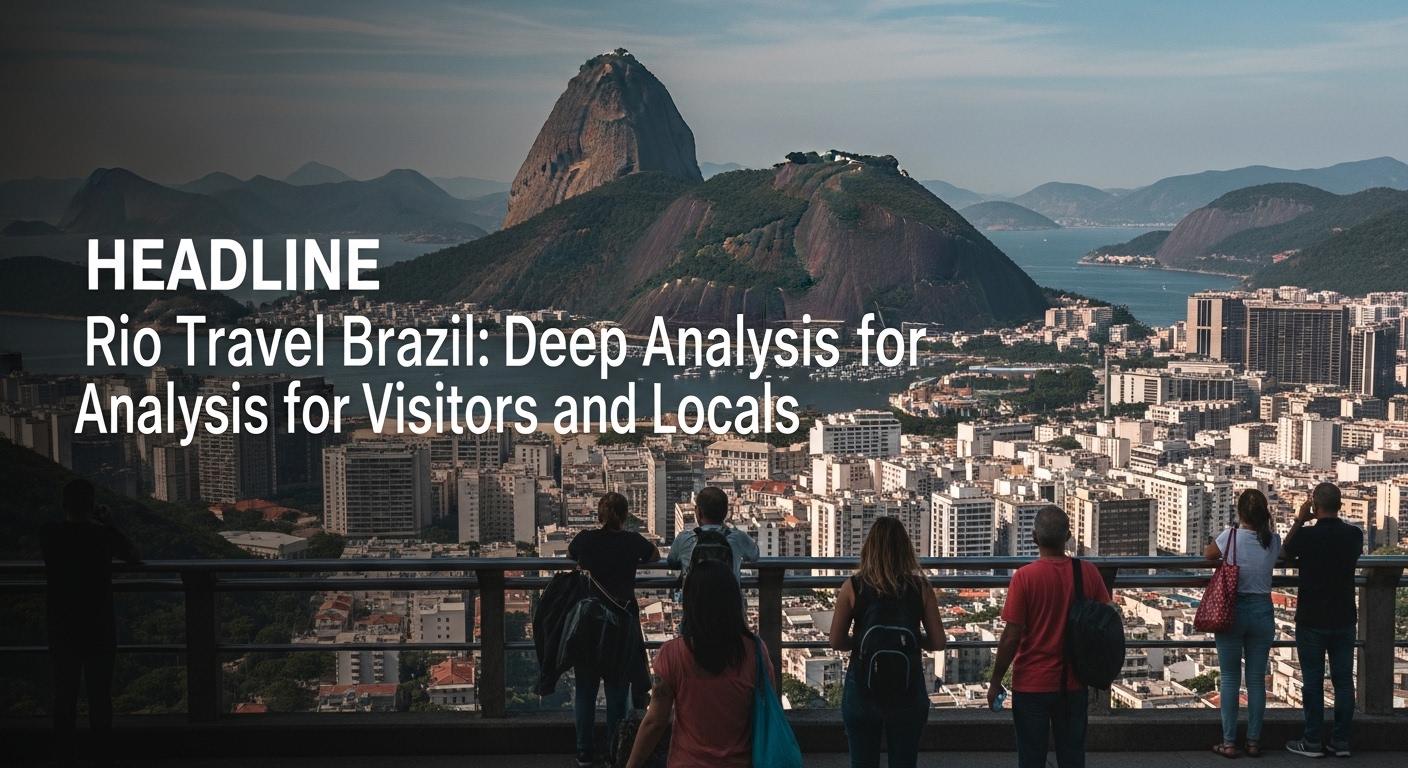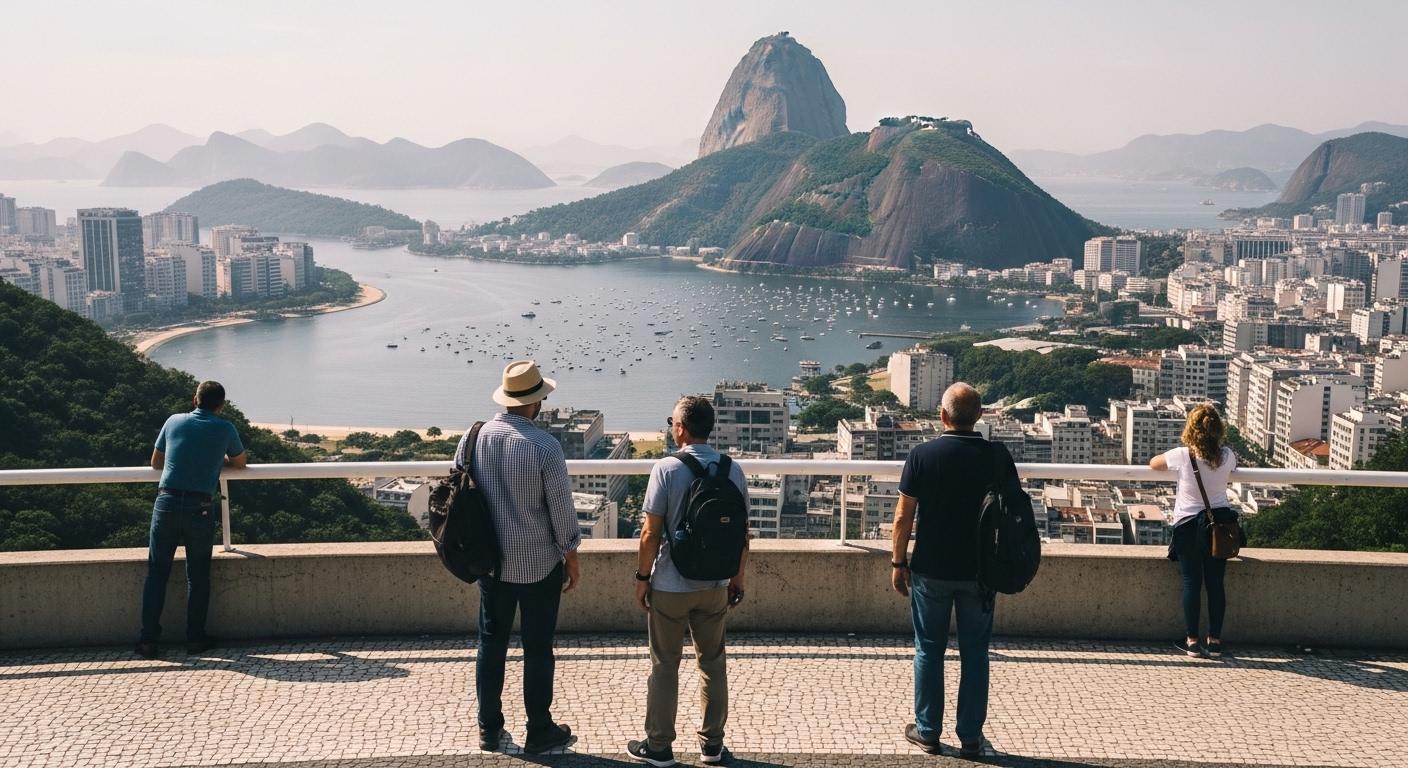
This introduction explains why Travel Brazil remains essential for travelers seeking depth. Brazil’s vast geography, diverse cultures, and evolving infrastructure combine to offer experiences that challenge simple itineraries. For both Brazilian readers and international visitors, the current moment presents not just new destinations but a chance to rethink what counts as meaningful travel. This analysis maps the forces shaping Brazil’s appeal, the risks to monitor, and practical paths to explore with purpose.
Why Travel Brazil Now
Across Brazil’s states, tourism demand has shifted from a rebound phase to a more differentiated landscape that rewards careful planning. The country’s urban cores—São Paulo, Rio de Janeiro, and Belo Horizonte—remain engines of culture, cuisine, and innovation, while the coastline and hinterlands offer biodiversity-rich itineraries that connect ecosystems with local communities. A historically fluctuating exchange rate has, in recent years, altered the economics of long-haul travel and multi-region trips, sometimes narrowing the gap between domestic and international options. When paired with improving airport connectivity and expanding domestic flight networks, these dynamics enable longer, more layered journeys rather than single-city snapshots.
Demand is increasingly event-driven: Carnaval, regional festivals, and ecotourism experiences draw travelers who want to balance city immersion with nature immersion. The wildlife corridors of the Pantanal and Amazon, the coastlines of the Northeast, and the highlands of the Southeast all present distinctive attractions that can be stitched into a single circuit with proper pacing. Yet the upside comes with a caveat: the size of Brazil means time is a scarce resource, and travelers must design itineraries that respect distances, weather, and local rhythms.
From a safety and sustainability perspective, the moment also requires nuance. Urban centers offer extraordinary experiences but demand situational awareness and prudent security practices. Rural and ecotourism areas, increasingly supported by community-driven enterprises, can deliver deeper cultural insights when visitors choose licensed guides and responsible operators. Taken together, these factors suggest a travel approach that combines regional diversity with a clear sense of purpose and a commitment to minimizing negative impacts on vulnerable ecosystems.
Cities, Nature and Routes
A well-structured Brazil itinerary typically weaves urban culture with biomes, using Brazil’s flight network to stitch together multi-regional experiences. A common arc begins in the Southeast, with São Paulo or Rio de Janeiro anchoring the cultural narrative through museums, gastronomy, and music. From there, travelers often move to the Northeast for beaches, colonial heritage, and distinctive music and cuisine, visiting cities such as Salvador, Recife, or Fortaleza. The inland or northern leg can pivot toward nature-focused destinations like the Pantanal in Mato Grosso or the Amazon basin, with a later return through Iguazu Falls at the tri-border region of Brazil, Argentina, and Paraguay or via a northern gateway such as Manaus for rainforest immersion.
Seasonality matters. The Northeast generally offers favorable beach weather for a larger portion of the year, while the Pantanal and Amazon attract wildlife viewing during the drier months, typically aligning with mid-year travel windows. Domestic flight hubs—paired with reputable regional carriers—make these connections feasible, but travelers should allocate extra time for weather-related delays and inter-city transfers. When planning, consider a modular design: a core two-week framework that can be extended with a 5–7 day wildlife segment or a 3–5 day cultural detour depending on interests and budget.
Logistics matter as much as landscapes. Intercity trains are limited in scope in Brazil, so air travel remains the time-efficient option for long distances. Within cities, ride-hailing and licensed taxis are common, but it pays to verify insurance and licensing, particularly in smaller towns and remote ecotourism sites. For those seeking authenticity, prioritize locally owned lodges and community-based tours that promote conservation funding and direct benefit to host communities.
Sustainability, Safety and Practicalities
Responsible travel in Brazil blends cultural respect with environmental stewardship. Tourists should seek licensed operators, insist on transparent pricing, and support providers that adhere to local conservation and community standards. This approach reduces vulnerability to scams and reinforces positive economic spillovers in regions that depend on tourism for livelihoods. Language can be a barrier, so practical Portuguese basics, offline phrase sheets, and guides with multilingual capabilities improve both safety and enjoyment.
Practical considerations include health insurance, up-to-date vaccinations as advised by healthcare professionals, and awareness of weather patterns that can rapidly alter plans in tropical zones. Currency is the Brazilian Real, though many venues accept cards; travelers should carry some cash for markets and smaller towns. Connectivity varies by region, so a portable charger and local SIM can enhance navigation and emergency contacts. Finally, travelers should stay informed about local advisories and travel tips from official sources, especially in border areas and ecotourism sites where infrastructure may lag behind demand.
Actionable Takeaways
- Design a multi-region itinerary with at least 2–3 days between major hubs to account for distances and pace.
- Choose licensed guides and community-based operators to maximize cultural insight and support sustainable tourism.
- Balance nature and city experiences by pairing a coastal/Northeast leg with wildlife-focused interiors such as the Pantanal or Amazon.
- Learn basic Portuguese phrases, download offline maps, and confirm payment methods in advance to minimize disruption.
- Plan for weather and safety: monitor local advisories, respect local customs, and carry essential documents securely.
Source Context
Context and background sources that informed this analysis: